When to Choose No-Code Development for Your MVP?

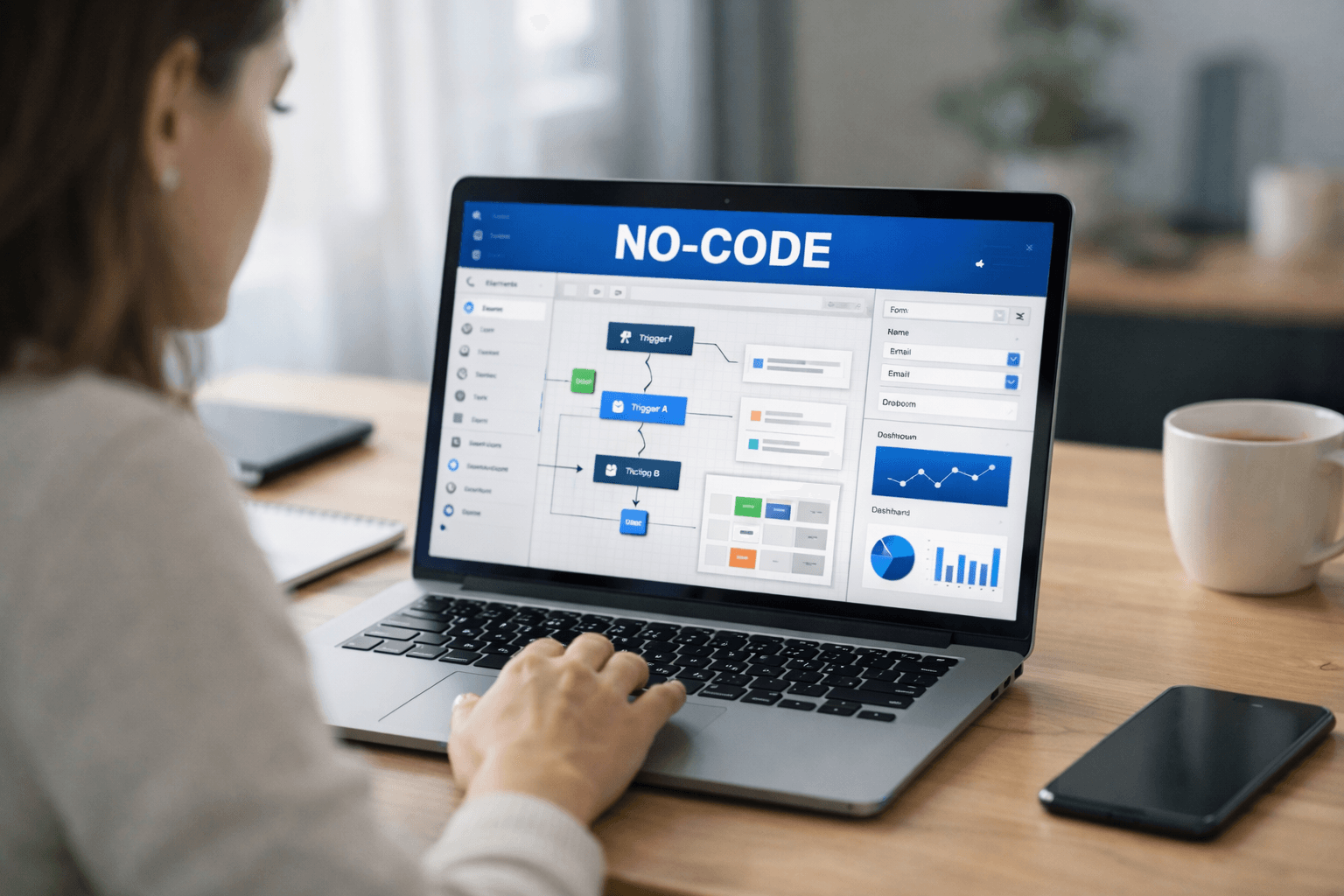
When No-Code Makes Perfect Sense for Your Startup MVP
You've got the idea. You've done the market research. Maybe you've even lined up your first potential customers. Now comes the question that trips up almost every founder: how do I actually build this thing? Certain scenarios practically scream "use no-code." If you recognize yourself here, stop second-guessing.
-
You're a non-technical solo founder. Building technical skills takes years. No-code lets you ship a real product while you focus on customers, marketing, and sales. You maintain control without depending on contractors who might ghost you mid-project.
-
You're validating an unproven idea. Why invest heavily in something users might reject? No-code lets you test assumptions fast. If the idea flops, you've lost weeks and a few hundred dollars not months and tens of thousands.
-
Your runway is tight. Early-stage startups burn cash fast. Keeping development costs under $5,000 while still shipping a functional product extends your runway significantly. That extra time could mean the difference between finding product-market fit and running out of money.
-
You need to show investors something tangible. A working product beats a pitch deck every time. No-code lets you demonstrate your concept, gather real user data, and prove traction before asking for funding.
-
Your competitive advantage isn't technical. If you're winning on branding, customer experience, niche expertise, or distribution not proprietary technology no-code handles everything you need.
-
You should definitely read top-benefits-of-no-code-app-development

No-Code MVP Timeline: From Idea to Launch
Speed is where no-code genuinely shines. Industry data shows development time reductions of up to 90% compared to traditional approaches.
Realistic timelines:
| Complexity | DIY Timeline | With Agency |
|---|---|---|
| Simple (landing page + forms) | 1–2 weeks | 3–5 days |
| Medium (user accounts, dashboard) | 3–6 weeks | 2–3 weeks |
| Complex (marketplace, multi-user) | 6–12 weeks | 4–6 weeks |
One stat worth noting: 72% of no-code users build functional apps in under 3 months. That includes the learning curve.
But here's the honest part "no-code" doesn't mean "no learning." Budget 2-4 weeks just to get comfortable with your platform of choice. The visual interfaces are intuitive, but mastering workflows, database structures, and integrations takes time.
you can also explore the evolution of no-code technology with softr
How much No-Code MVP will Cost?
No-code slashes upfront costs dramatically. Here's what realistic budgets look like:
| Approach | Cost Range | What's Included |
|---|---|---|
| DIY Build | $0 – $200/month | Platform subscription, your time |
| Pro Plan Platforms | $25 – $500/month | More capacity, custom domains, integrations |
| No-Code Agency | $1,500 – $5,000 | Professional build, faster delivery |
Most founders start on free tiers or basic plans under $50/month. As you add users, features, and integrations, costs scale but we'll cover that in the hidden costs section.
The real savings? You're not paying developer salaries ($80K-$150K/year) or agency retainers. For validation-stage products, that difference is massive.
The Hidden Costs of No-Code MVPs
No-code saves money upfront. But some costs sneak up on founders who don't plan ahead.
-
Workload-based pricing. Most platforms charge based on usage database rows, workflows executed, API calls, or monthly active users. What costs $29/month at launch might cost $300/month with 5,000 users. Model your growth against pricing tiers before committing.
-
Third-party integrations. Connecting payment processors, email services, analytics tools, and external APIs often requires additional subscriptions. Zapier or Make automations add $20-$100/month. Payment processing fees (2.9% + $0.30 per transaction) apply regardless of how you built.
-
Plugin and extension costs. Platforms like Bubble have plugin marketplaces. Some essential features require paid plugins.
-
Your time investment. This is the big one nobody quantifies. Learning the platform, building features, troubleshooting bugs, optimizing performance it's work. If your time is worth $100/hour and you spend 200 hours building, that's $20,000 in opportunity cost.
-
Platform dependency. You can't typically export your application's logic or code. If a platform raises prices, changes features, or shuts down, your options are limited. This isn't a direct cost, but it's a risk factor worth acknowledging.
-
Performance optimization. As your app grows, you'll spend time optimizing database queries, simplifying workflows, and restructuring features to maintain speed. This maintenance time compounds.
When to Choose No-Code & when not to
No-code fits specific situations better than others. It's not about whether no-code is "good" or "bad" it's about whether it matches your current needs.
Your product fits the no-code sweet spot if it's:
- A marketplace or directory
- A SaaS dashboard or admin panel
- A client portal or membership site
- An internal business tool
- A booking or scheduling system
- A content platform or community
- An e-commerce store with standard features
Never choose no-code tool when you are building :

- Custom machine learning models
- Complex real-time applications
- Games
- Hardware integrations
- Highly specialized algorithms
Top No-Code Platforms (And What They're Best For)
Not all platforms do the same thing. Picking the wrong one wastes weeks. Here's the honest breakdown:
| Platform | Best For | Starting Price | Learning Curve |
|---|---|---|---|
| Bubble | Complex web apps, SaaS, marketplaces | $69/mo | Steep |
| Webflow | Marketing sites, blogs, portfolios | $14/mo | Moderate |
| Adalo | Mobile apps, simple products | $45/mo | Easy |
| Glide | Mobile-first apps from spreadsheets | $25/mo | Easy |
| Softr | Portals, directories (Airtable-based) | $59/mo | Easy |
| FlutterFlow | Native mobile apps | ₹1,300/mo | Moderate |
Note : The prices listed above reflect the first paid plan after the free tier for each platform.
You can also checkout G2 guide on no-code platforms
Scalability factors that matter:
5 tips for scaling no code apps
Limit data loading to what's necessary on each page. Use pagination instead of loading everything. Compress images before uploading. Schedule heavy operations during off-peak hours. Archive old data that isn't actively needed.
The founders who scale successfully treat optimization as ongoing work, not a one-time fix.
Will Investors Fund Your No-Code MVP? What VCs Actually Think :

At early stages, most investors don't care how you built it. They care whether it works and whether people want it.
Pre-seed and seed stage: Investors want traction, not technology. User growth, revenue, retention metrics, and market opportunity matter infinitely more than your tech stack. A working no-code MVP with 1,000 paying users can beat a theoretical product.
What investors actually evaluate:
- Does the product solve a real problem?
- Is there evidence of demand (users, revenue, waitlist)?
- Does the team understand their market?
- Is the business model viable?
- Can this grow into something big?
The no-code advantage for fundraising: You can demonstrate answers to these questions faster. Instead of pitching an idea, you're showing results, you're showing future. And that de-risks the investment in their eyes.
Later-stage considerations: Series A and beyond typically involves more technical due diligence. Investors may ask about scalability, security, and long-term architecture. But here's the thing if you've reached that stage, you've validated demand. That puts you in a strong negotiating position.
Several successful startups raised significant funding on no-code foundations. Lambda School (now BloomTech) raised $122M total.
FAQs
1. What exactly is a no-code MVP?
An MVP built using visual development platforms instead of traditional programming. Think drag-and-drop interfaces, pre-built components, and logic flows you can set up without writing a single line of code.
2. For Technical Founders: Should You Use No-Code for Your MVP?
You already get how databases work, you understand logic flows, and API stuff isn't foreign to you. No-code is just a different way to build the same things. So yeah, you'll pick it up way faster than someone starting from scratch. And honestly, It's kind of a win. You don't need to hand code every little button and form when a platform can handle that in minutes. Save your energy for the parts that actually need custom work.
3. When technical founders should skip no-code?
Your core innovation is technical. If proprietary algorithms, unique data processing, or novel technology IS your product, no-code won't serve you. You already have the infrastructure. If your team has production-ready boilerplates, deployment pipelines, and component libraries, starting fresh might actually be faster. Specific performance requirements from day one. Real-time applications, heavy computation, or enterprise security needs might exceed no-code capabilities immediately.
4. Can No-Code MVPs Actually Scale?
The honest answer: yes, but with ceilings. Most no-code platforms handle 10,000-50,000 users without major issues. Several startups have scaled well beyond that with careful optimization. 10 real example of no-code startups who scaled .